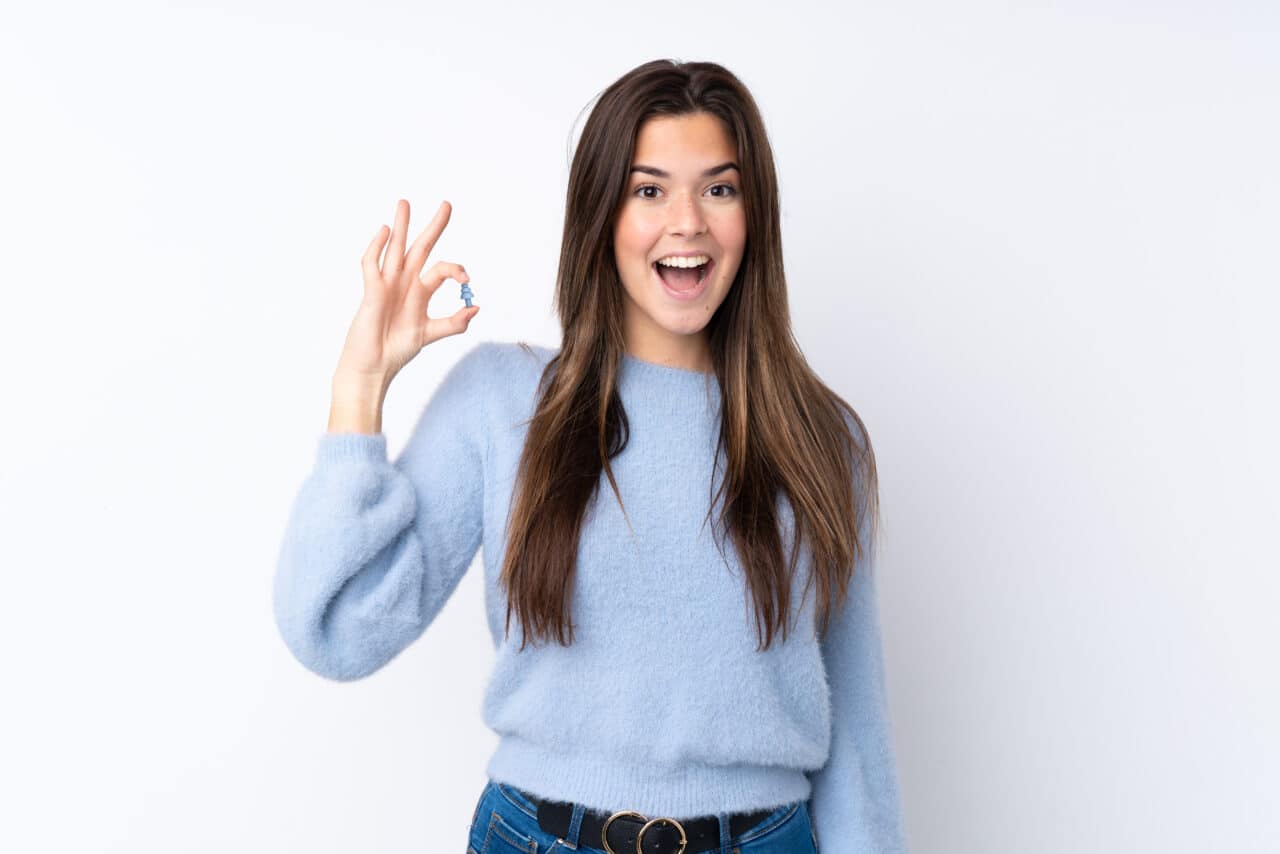
Yes, clubbing can cause noise-induced hearing loss. Nightclubs regularly hit sound levels between 100 and 110 dB, and even a single night out without ear protection can permanently damage the hair cells in your inner ear. The damage often shows up as ringing in your ears after you leave, but the underlying injury can be lasting. The good news is that it is entirely preventable, and wearing the right earplugs means you can still enjoy the music fully.
What is noise-induced hearing loss?
Noise-induced hearing loss (NIHL) is permanent hearing loss caused by exposure to loud sounds. Inside your inner ear, the cochlea contains thousands of tiny hair cells that convert sound waves into electrical signals your brain can interpret. When sound is too loud, it physically damages these hair cells through mechanical force. And here is the part that matters most: once those hair cells are gone, they do not grow back. There is no surgery, no medication, and no treatment that can restore them.
NIHL falls into two categories. Occupational NIHL builds up gradually from repeated exposure over years, the kind you might see in construction workers or factory employees. Recreational NIHL is different because it can result from a single exposure to dangerously high sound levels, causing what is called acoustic trauma. A night at a loud club absolutely qualifies as that kind of exposure.
Alongside hearing loss, many people also develop tinnitus, a persistent ringing, hissing, or buzzing in the ear with no external source. Tinnitus is not just annoying. In severe cases, it disrupts sleep, increases anxiety, causes mental fatigue, and significantly reduces quality of life. The tricky part is that tinnitus and hearing loss can feel temporary at first, which gives many people a false sense of security.
How loud does a sound have to be to damage your hearing?
The risk to your hearing depends on two things: how loud the sound is and how long you are exposed to it. The National Institute for Occupational Safety and Health (NIOSH) states that exposure to sound at 100 dBA is only safe for a maximum of 15 minutes before you start risking noise-induced hearing loss. Every 3 dB increase roughly halves the safe exposure time.
To put that in perspective, normal conversation sits around 60 dB. A busy restaurant might reach 80 dB. A motorcycle engine runs at around 90 dB. At 100 dB and above, you are in territory where real, lasting damage can happen fast. Sound levels that exceed 132 dB, like the discharge of a firearm, can cause immediate acoustic trauma from a single exposure.
The challenge is that loudness is not always obvious in the moment. Your ears adapt to high volumes, which makes it easy to underestimate how much noise you are actually absorbing over the course of an evening.
How loud is a nightclub, and is it loud enough to cause damage?
Nightclubs are loud enough to cause hearing damage. Sound levels in clubs and at live music venues in the US regularly exceed 110 dB, and they frequently stay there for hours at a time. According to the World Health Organization, nearly 40% of teenagers and young adults aged 12 to 35 in middle- and high-income countries are exposed to potentially damaging sound levels in recreational settings like nightclubs, discotheques, and bars.
Unlike many European countries, the United States has no federal noise regulations for entertainment venues. That means there is no legal ceiling on how loud a club can play its music, and no requirement to warn you when sound levels become hazardous. You are essentially on your own.
At 110 dB, NIOSH guidelines suggest safe exposure is just under two minutes. If you are spending three or four hours on a dance floor at that volume, the cumulative noise dose your ears absorb is far beyond what is considered safe, even accounting for the natural variation in sound levels throughout the night.
What are the early signs of hearing damage after a night out?
The most common early sign is tinnitus, that ringing or buzzing in your ears after you leave a loud venue. Most people have experienced it and written it off as normal. It is not. That ringing is your auditory system signaling that something has gone wrong.
Other early signs include:
- Muffled or dulled hearing in the hours after leaving a loud environment
- Difficulty following conversations in noisy settings
- Sounds feeling slightly distorted or unclear
- A feeling of fullness or pressure in the ears
These symptoms often feel temporary, and sometimes they are. But research shows that even when short-term symptoms fully resolve, progressive and irreversible injury to the inner ear can continue for months. There is also something called hidden hearing loss, where damage does not show up on a standard hearing test but leaves you struggling to understand speech in noisy environments. If you notice these signs regularly after nights out, your hearing is telling you something worth listening to.
Can hearing loss from clubbing be reversed or treated?
In most cases, no. Noise-induced hearing loss is largely irreversible because the hair cells in the cochlea that are destroyed by loud sound cannot regenerate. There is currently no approved medical treatment that restores hair cell function once it is lost. Hearing aids and cochlear implants can help manage the impact, but they do not restore normal hearing.
What can sometimes recover is a temporary threshold shift, a short-term reduction in hearing sensitivity that follows loud noise exposure. This is what most people experience as muffled hearing the morning after a club night. But repeated temporary shifts are a warning sign that permanent damage is accumulating over time. Each time your hearing bounces back, it may not be bouncing back quite as far as it did before.
The only real treatment for noise-induced hearing loss is prevention. That is not a cop-out. It is just the reality of how the auditory system works, and it makes protecting your ears before the damage happens the only strategy that actually works.
Do earplugs actually work in a nightclub?
Yes, earplugs work extremely well in a nightclub, but the type of earplug matters a lot. Standard foam earplugs muffle sound unevenly, cutting out high frequencies more than low ones and leaving music sounding dull and distorted. For most people, that trade-off feels too steep, so they skip the earplugs entirely.
High-fidelity earplugs are designed differently. Instead of just blocking sound, they use a filter to reduce volume evenly across the frequency range. The result is that music still sounds like music. The bass, the mids, the highs, all of it stays balanced. It is simply quieter and safer. You can hold a conversation, feel the energy of the room, and enjoy the set without the volume putting your hearing at risk.
A good pair of high-fidelity earplugs with an SNR of 23 dB can bring a 110 dB environment down to around 87 dB, which is a level your ears can handle for a full night out. That is a meaningful, practical difference.
How can you protect your hearing without missing out on the music?
The most effective thing you can do is wear high-fidelity earplugs every time you go to a club or live music event. Not sometimes. Every time. Hearing damage is cumulative, and the nights you skip protection are the nights that add up.
Beyond earplugs, a few other habits help:
- Take breaks from the loudest areas. Stepping outside or moving away from the speakers for even 10 minutes gives your ears some recovery time during the night.
- Stand further from the speakers. Sound intensity drops significantly with distance. Moving back even a few meters can reduce your exposure meaningfully.
- Give your ears recovery time after a loud night. Avoid other loud environments the day after a club night to let your auditory system settle.
- Keep your earbuds at a safe volume on the way home. Piling more loud sound on top of an already stressed auditory system is not doing you any favors.
The goal is not to stop going out. It is to keep going out for decades without paying for it with your hearing. That is entirely achievable with the right habits and the right gear.
If you want earplugs that actually make this easy, our Shush Acoustic music earplugs are built specifically for this. They use a ceramic Venturi-shaped filter, the only one of its kind, positioned inside the earplug to preserve clear, undistorted sound while reducing volume by 23 dB. Made from soft hypoallergenic synthetic rubber, they are more comfortable and more durable than foam or silicone alternatives, and they last at least a year of regular use. You put them in, the music still sounds great, and your ears stay protected. That is the whole point.
Veelgestelde vragen
How do I know which earplugs to buy for clubbing — there are so many options out there?
Look for high-fidelity earplugs with a flat attenuation filter, meaning they reduce volume evenly across frequencies rather than just muffling everything. Key specs to check are the SNR (Signal-to-Noise Ratio) or NRR rating — aim for at least 20 dB of reduction for club environments. Avoid basic foam earplugs for music events, as they distort sound significantly. Brands that specifically market their earplugs for concerts and nightlife are generally your safest bet.
I only go clubbing a few times a year — is that really enough to cause permanent hearing damage?
Yes, unfortunately it can be. Even a single exposure to sound levels above 100 dB for an extended period can cause acoustic trauma and permanent hair cell damage. Infrequent exposure does not eliminate the risk — it just means you have fewer total events accumulating damage. Think of it like sun exposure: you can still get a serious burn on one bad day, even if you rarely go outside.
What should I do if my ears are still ringing the day after a night out?
If tinnitus persists for more than 24–48 hours after a loud event, that is a strong signal that your ears have sustained more than just a temporary threshold shift, and you should see an audiologist or ENT (ear, nose, and throat) specialist as soon as possible. In the meantime, rest your ears completely — avoid headphones, loud music, and noisy environments. Do not ignore persistent ringing or dismiss it as normal; early evaluation gives you the best chance of understanding the extent of any damage.
Can I use regular drugstore foam earplugs in a pinch, or are they completely useless for clubbing?
Foam earplugs are far better than nothing — they will still reduce your overall noise exposure and lower your risk of damage compared to wearing nothing at all. The real downside is that they attenuate high frequencies much more than low ones, so music will sound muddy and bass-heavy, which many people find unbearable enough to take them out. If high-fidelity earplugs are not available, foam is a valid emergency option, but they are not a long-term substitute for music-specific earplugs.
Are there any apps I can use to check how loud a venue is before or during a night out?
Yes — free apps like NIOSH SLM (developed by the National Institute for Occupational Safety and Health) and Decibel X turn your smartphone's microphone into a sound level meter. They are not laboratory-grade instruments, but they give you a reliable enough reading to understand whether you are in a genuinely hazardous environment. Checking the level when you arrive at a venue is a great habit, especially if you are trying to decide where to stand or whether to put your earplugs in.
Do musicians and DJs wear hearing protection, or is that just something audiences need to worry about?
Professional musicians and DJs are actually among the highest-risk groups for noise-induced hearing loss, and many do wear hearing protection — typically custom-molded in-ear monitors (IEMs) or high-fidelity earplugs. Many well-known artists, including Chris Martin of Coldplay and will.i.am, have spoken publicly about tinnitus and hearing loss from years of loud performance exposure. The fact that the people closest to the speakers use protection is a pretty compelling argument for the rest of us to do the same.
At what age does hearing damage from clubbing typically start to show up noticeably?
Noise-induced hearing loss can begin accumulating in your teens and twenties, but the noticeable effects often do not become obvious until your thirties or forties — which is precisely what makes it so easy to ignore when you are young. By the time you clearly struggle to follow conversations in noisy restaurants or need the TV louder than others, significant and irreversible damage has already occurred. Getting a baseline hearing test from an audiologist in your twenties is a smart move if you regularly attend loud events, so you have a reference point to track changes over time.
Gerelateerde artikelen
- How do filters in high-fidelity earplugs preserve sound quality?
- What are the long-term consequences of skipping ear protection at concerts?
- Can earplugs for nightclubs help people with sensory sensitivities enjoy going out?
- Can earplugs for loud events still let you feel the crowd energy?
- Do earplugs for football games affect how you hear the referee's whistle?
- Why do regular foam earplugs muffle music so badly at concerts?
- Are custom-molded earplugs a good investment for frequent clubbers?
- What is the difference between earplugs for live music and standard foam plugs?
- Can you really prevent hearing damage at concerts without losing sound quality?
- Are foam earplugs good enough for stadium concerts?
- Can wearing earplugs that preserve music clarity improve your concert experience?
- What causes hearing loss at loud concerts?
- How does standing near speakers at a stadium concert affect hearing damage risk?
- Can hearing protection at festivals still let you enjoy music?
- Do earplugs affect how you experience bass and low-frequency sound at concerts?