Why are DJs at risk of hearing damage?
Standing behind a DJ booth for a four-hour set is not just loud, it is dangerously loud. The CDC reports that concert venues and nightclubs regularly reach sound levels between 105 and 110 dB. At those levels, you have roughly three minutes of safe exposure before your ears start taking real damage. A DJ performing a full night does not get three minutes of exposure, they get hours of it.
The risk comes from two directions. First, the main speakers project outward into the room, and the DJ booth sits close enough to catch a significant portion of that output. Second, monitor speakers on the booth face directly toward the DJ so they can hear the mix over the crowd noise. Those monitors are often turned up louder than they need to be, adding another concentrated source of sound right at ear level.
Hearing damage from noise is cumulative. Each loud session adds to the total, and the damage does not reverse between shows. Many DJs notice ringing in their ears after a gig, which is a warning sign called tinnitus. Even when that ringing fades by morning, research suggests the underlying injury to the inner ear hair cells may continue progressing. Over time, this leads to permanent hearing loss that no medication or surgery can fix.
What is noise-induced hearing loss in musicians?
Noise-induced hearing loss, often shortened to NIHL, happens when loud sound damages the tiny hair cells in the inner ear. These cells convert sound vibrations into signals the brain can read. Once they are damaged, they do not grow back.
For musicians and DJs, the pattern of damage is often different from what you see in industrial workers. Music exposure tends to be high-frequency heavy, which means the early losses often show up in the upper ranges first. A DJ might not notice anything wrong in normal conversation but struggle to hear the clarity of hi-hats or vocals in a mix. This is sometimes called hidden hearing loss because it does not always show up on standard hearing tests, even while real damage is already present.
Tinnitus, a persistent ringing or buzzing sound, is one of the most common early symptoms. It affects a significant portion of musicians and audio professionals. Some experience it only temporarily after a loud show, but repeated exposure makes it more likely to become permanent. The frustrating reality is that by the time hearing loss becomes obvious, a meaningful amount of damage has already been done.
How do high-fidelity earplugs work for DJs?
Standard foam earplugs work by blocking sound indiscriminately. They stuff the ear canal and muffle everything, which makes music sound flat, dull, and hard to read. For a DJ who needs to hear the balance of a mix in real time, that kind of distortion is not workable.
High-fidelity earplugs take a different approach. Instead of blocking sound, they use a filter to reduce volume evenly across the frequency range. The goal is to turn down the overall level while keeping the tonal balance of the music intact. A well-made high-fidelity earplug lets you hear the bass, mids, and highs in roughly the same proportions as without protection, just at a safer volume.
The quality of the filter makes a significant difference. Filters made from ceramic conduct sound more cleanly than plastic alternatives, which means less distortion and a more natural listening experience. The shape of the filter also matters. A venturi design, which narrows and then widens like a funnel, helps sound waves pass through without breaking up, which preserves clarity. For a DJ who needs to make real-time decisions about EQ, levels, and transitions, that clarity is not a luxury, it is a practical requirement.
What’s the difference between foam earplugs and musician earplugs?
Foam earplugs are cheap, widely available, and designed for one purpose: blocking as much sound as possible. They work well in industrial settings where the goal is to shut out machine noise and you do not need to hear anything in particular. For music, they are close to useless. The muffling effect is so heavy that it distorts the sound beyond recognition.
Musician earplugs, sometimes called high-fidelity earplugs or flat-attenuation earplugs, are built around a different principle. They aim to reduce volume uniformly rather than cutting off specific frequencies. The result is that music still sounds like music, just quieter. You can hold a conversation, hear a DJ cue clearly, and make accurate mix decisions without removing the earplugs.
There are two main categories within musician earplugs. Universal-fit earplugs use a standard design that fits most ear canals, often with multiple tip sizes for a better seal. Custom-molded earplugs are made from an impression of your specific ear canal taken by an audiologist. Custom plugs offer a more precise fit and are popular with touring professionals, but they come at a significantly higher cost. Universal high-fidelity earplugs offer strong protection and sound quality at a fraction of the price, making them a practical starting point for most DJs.
Do professional DJs actually wear earplugs while performing?
Many do, though it took time for the practice to become normalized. For years, wearing earplugs in a club felt like admitting weakness or disconnecting from the energy of the room. That perception has shifted as more high-profile DJs have spoken publicly about hearing loss and tinnitus.
Some DJs use custom-molded in-ear monitors instead of traditional earplugs. These serve a dual purpose: they feed a custom mix directly to the DJ’s ears while blocking out ambient noise from the room. This setup gives the DJ more control over what they hear and reduces their reliance on loud monitor speakers. However, in-ear monitors are expensive and require a dedicated monitoring setup, which is not always available at every venue.
Others use high-fidelity universal earplugs as a simpler, more portable alternative. These can be worn at any venue without additional equipment and still provide meaningful protection. The key shift in professional DJ culture is that protecting your hearing is now widely seen as a smart, long-term investment in your career rather than a compromise.
What other hearing protection strategies do DJs use?
Earplugs are the most direct form of protection, but they work best as part of a broader approach. Here are the strategies that experienced DJs and audio professionals use alongside hearing protection:
- Manage monitor volume: The booth monitors are often the biggest source of exposure for a DJ. Keeping them at the lowest level that still allows a clear mix reduces the total sound dose significantly over a long set.
- Take breaks from loud environments: Stepping away from the speakers for even fifteen minutes during a set gives the ears some recovery time and reduces the cumulative dose. The WHO recommends that venues provide quiet zones specifically for this reason.
- Get regular hearing tests: Audiologists recommend that anyone regularly exposed to loud environments get their hearing tested at least once a year. Early detection of changes makes it possible to adjust habits before damage becomes severe.
- Position yourself strategically: Standing directly in front of a speaker stack is far more damaging than standing slightly to the side or further back. Small adjustments in booth positioning can make a measurable difference.
- Limit exposure outside of work: If a DJ is spending four hours a night in a loud club, keeping other noise exposures low during the day helps them stay within a safer total dose. The 80-90 rule, which suggests limiting personal audio device volume to 80% and listening time to 90 minutes per day, is a useful guideline for off-duty listening.
When should a DJ start using hearing protection?
The straightforward answer is: before you notice any problem. Hearing loss from noise develops gradually and without pain. By the time ringing, muffled hearing, or difficulty understanding speech becomes noticeable, a meaningful amount of damage has already occurred. Prevention is the only genuinely effective strategy because there is no treatment that restores hearing lost to noise exposure.
If you are playing your first club night, attending regular events, or spending time in any environment where you need to raise your voice to be heard, your ears are already being exposed to levels that carry risk. That is the point at which protection becomes relevant, not after symptoms appear.
Starting early also means building the habit before it feels urgent. DJs who start using high-fidelity earplugs from the beginning of their career adjust quickly and find that the sound quality is more than acceptable. Those who wait often find it harder to adapt because they are already used to the unfiltered sound and the distorted version that foam earplugs produce.
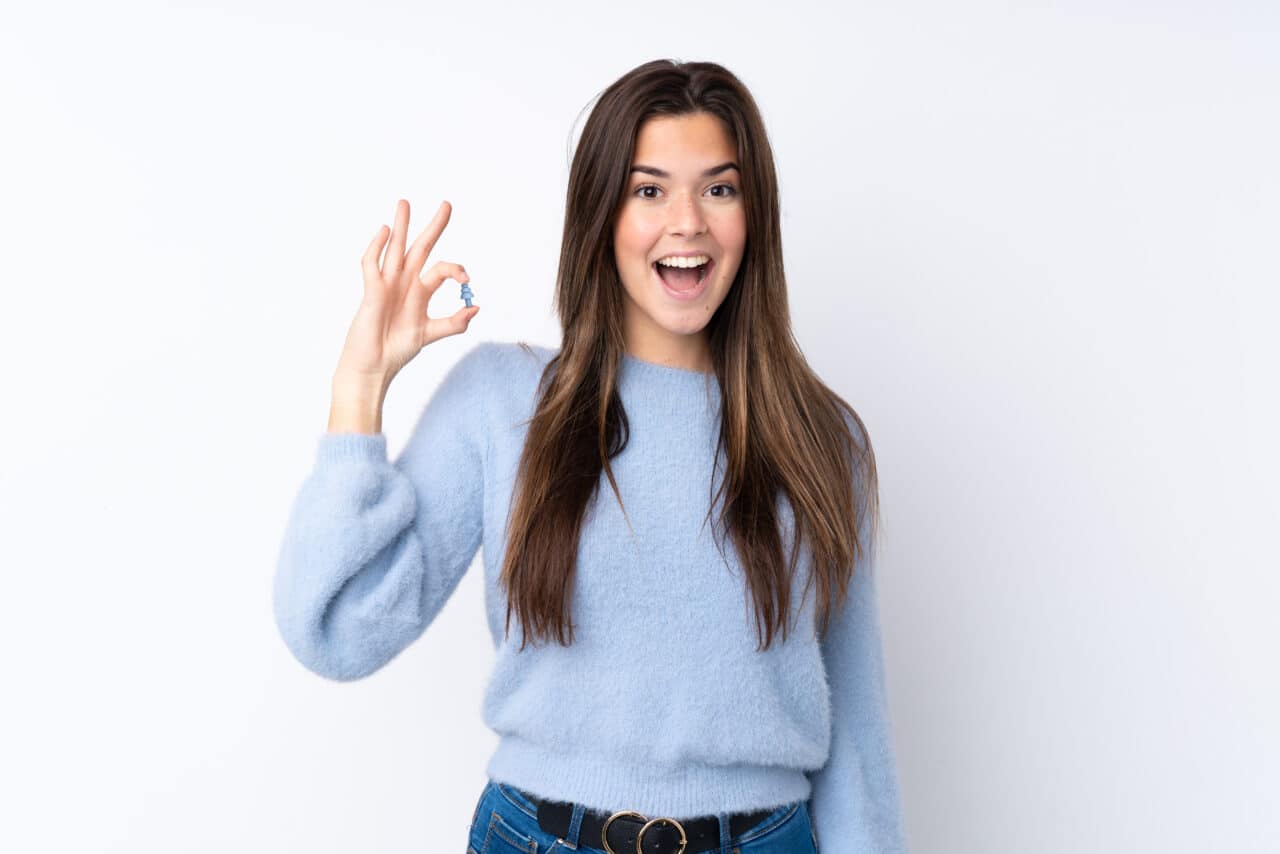
If you are looking for a practical starting point, we make music earplugs specifically designed for exactly this kind of environment. Our Shush Acoustic earplugs use a ceramic filter with a venturi shape that reduces volume by 23 dB while keeping the sound clear and balanced, not muffled. The filter sits inside the earplug rather than at the tip, which means you stay protected even in a smaller ear canal. They are made from hypoallergenic synthetic rubber that is more durable than silicone, reusable for at least a year, and comfortable enough to wear through a full set without discomfort. If you have ever tried cheap foam earplugs at a club and hated the experience, the difference is genuinely noticeable.
Veelgestelde vragen
How do I know if my current earplugs are actually reducing sound evenly, or just muffling everything?
The easiest way to test this is to put the earplugs in and listen to a familiar track you know well. If the bass sounds disproportionately heavy, the highs disappear, or the overall mix sounds like it is coming from underwater, the earplugs are muffling rather than attenuating evenly. High-fidelity earplugs with a quality filter should make the music sound like a quieter version of itself, not a distorted one. If you are unsure, an audiologist can also run a quick attenuation test to verify how your earplugs are performing across different frequencies.
Can I use in-ear monitors as hearing protection, or do I still need earplugs?
In-ear monitors can provide meaningful passive noise isolation, but whether they count as adequate hearing protection depends entirely on the volume you are feeding into them. If you crank the monitor mix to compete with room bleed, you are simply moving the source of the damage closer to your eardrum. The safest approach is to use IEMs with a dedicated monitor mix set at a controlled level, ideally below 85 dB, and to treat the isolation they provide as a bonus rather than the primary protection strategy. For DJs who do not have access to a full IEM setup at every venue, a pair of high-fidelity earplugs is a more reliable and consistent option.
What should I do if I already have tinnitus or some hearing loss — is it too late to bother protecting my ears?
It is absolutely not too late. While the damage that has already occurred cannot be reversed, protecting what remains is critically important because the hair cells that are still functioning are now doing more work to compensate, which makes them more vulnerable to further damage. Audiologists consistently advise that people with existing tinnitus or hearing loss are actually at higher risk from continued loud exposure, not lower. Starting protection now slows or stops the progression, and many people with tinnitus also find that reducing ongoing noise exposure helps prevent the ringing from worsening.
How long does it take to get used to performing with earplugs in?
Most DJs report that the adjustment period is shorter than they expected, typically one to three gigs before the filtered sound starts to feel natural. The biggest challenge is usually psychological rather than practical — the room feels slightly different and the instinct is to second-guess your mix decisions. A useful approach is to wear high-fidelity earplugs during practice sessions and home listening first, so your ears and brain adapt to the filtered sound before you are relying on it in a live performance context. By the time you are on stage, the experience will already feel familiar.
Are custom-molded earplugs worth the extra cost for a working DJ?
For DJs who perform multiple nights per week, the investment in custom-molded earplugs is generally worth it. The precise fit means better passive attenuation, less sound leakage around the seal, and significantly more comfort over a long set compared to universal-fit options. That said, the cost — typically between $150 and $300 when factoring in the audiologist visit — is a real barrier, and high-quality universal-fit high-fidelity earplugs deliver strong protection and sound clarity for a fraction of that price. A practical approach is to start with a quality universal option, build the habit, and upgrade to custom if you find yourself performing regularly enough to justify it.
How often should I replace my reusable high-fidelity earplugs?
Most high-quality reusable earplugs are designed to last at least a year with regular use, but the actual lifespan depends on how often you clean them and how well you store them. The filter is the most critical component — if it gets clogged with earwax or debris, the attenuation and sound quality will degrade noticeably. Clean the earplugs after each use with a dry cloth or the cleaning tool provided, store them in their case to prevent the material from degrading, and inspect the filter periodically. If the sound starts to feel more muffled or uneven than it used to, that is a sign the filter may need to be replaced or the earplugs have reached the end of their useful life.
What is the 80-90 rule, and how do I apply it to my everyday listening as a DJ?
The 80-90 rule is a practical guideline for personal audio device use: keep the volume at or below 80 percent of the maximum and limit continuous listening sessions to around 90 minutes before taking a break. For DJs who are already accumulating significant sound exposure during gigs, applying this rule to off-duty listening — commuting, studio sessions, casual music listening — helps keep the total daily noise dose within a safer range. Think of your ears as having a daily exposure budget: the louder and longer your gig, the more conservative your off-duty listening should be to stay within that budget.