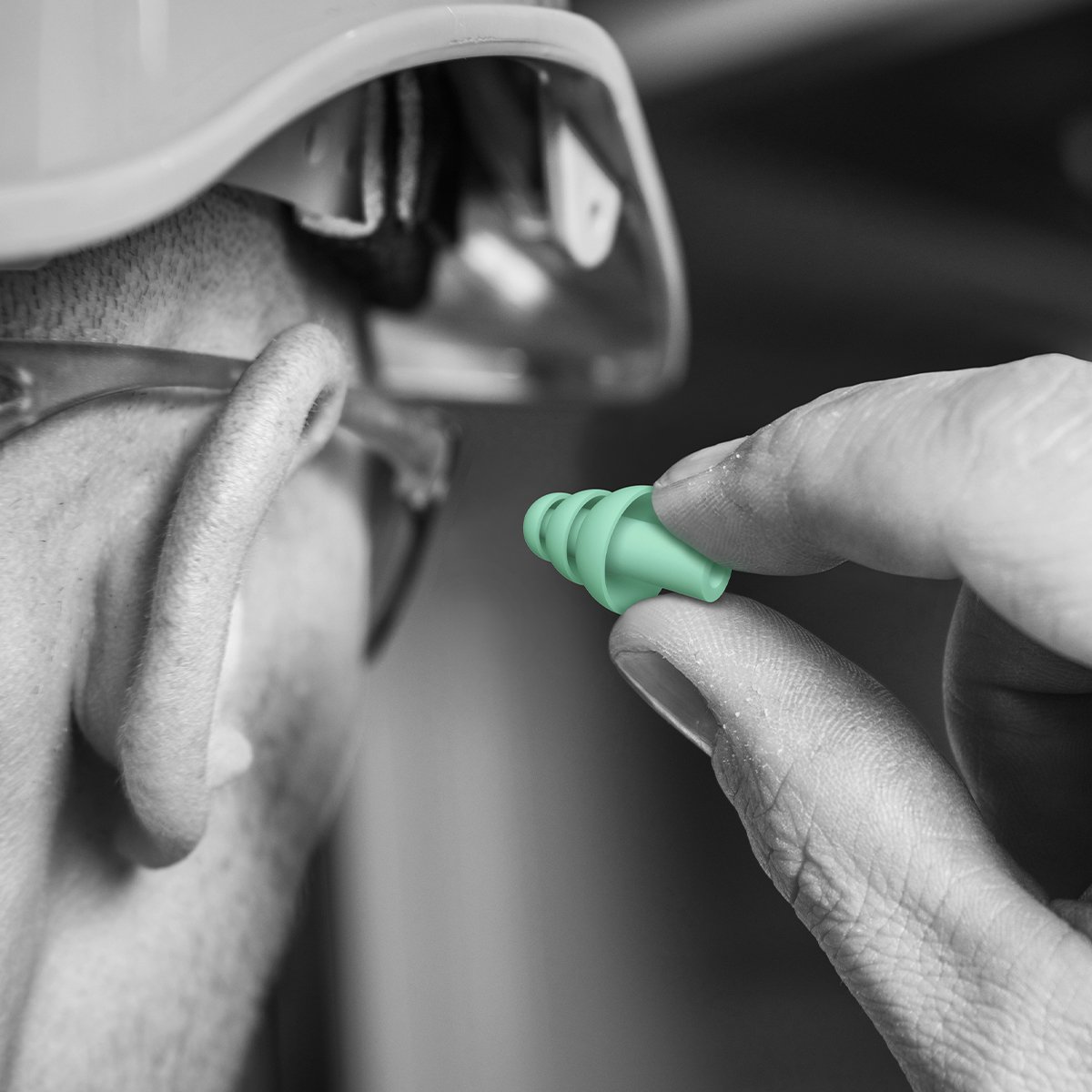
Yes, power tool noise is dangerous. Many common power tools operate at sound levels between 85 and 110 decibels, which is well above the threshold where hearing damage begins. Exposure does not have to be long to cause harm — even short bursts at high decibel levels add up over time. The sections below break down exactly how loud these tools are, how damage happens, and what you can do to protect yourself.
How loud are power tools compared to safe noise levels?
Most power tools produce noise in the range of 85 to 110 decibels, which puts them well above the 85 dB threshold where hearing protection becomes important. Safe listening levels for extended exposure sit at or below 85 dB. Anything louder than that starts to put your hearing at risk, and the danger increases significantly as volume goes up.
To put that in perspective, a circular saw typically runs around 100 to 105 dB, an angle grinder around 100 dB, and a jackhammer can hit 110 dB or more. Even a standard drill can reach 95 dB during heavy use. The decibel scale is logarithmic, meaning a tool at 100 dB is not just a little louder than one at 85 dB — it is roughly 30 times more intense in terms of sound energy. That gap matters a great deal when you are trying to understand how quickly damage can occur.
How does repeated power tool noise damage your hearing?
Repeated exposure to loud power tool noise damages the tiny hair cells inside your inner ear that convert sound vibrations into electrical signals your brain can interpret. Once these cells are destroyed, they do not regenerate. The damage is permanent and accumulates with every loud exposure, even when individual sessions feel short or manageable.
This type of hearing loss is called noise-induced hearing loss (NIHL). It does not happen all at once. Instead, it builds gradually over months and years of repeated exposure without protection. Each session at high decibel levels adds to the total burden on your auditory system. What makes it particularly tricky is that you often do not notice anything is wrong until a meaningful amount of hearing has already been lost. By the time speech starts sounding muffled or you find yourself turning up the TV more than you used to, the damage is already done.
What are the early signs of hearing damage from power tools?
The earliest signs of hearing damage from power tool noise include ringing or buzzing in the ears after use, difficulty understanding speech in noisy environments, and sounds feeling muffled or distant after a work session. These symptoms can appear temporarily at first and then become permanent with continued unprotected exposure.
Temporary ringing after using loud tools — known as tinnitus — is your ears signaling that they have been stressed. If the ringing goes away after a few hours, it may feel harmless, but it is a clear warning sign that the noise level was too high. Over time, that temporary ringing can become a permanent condition. Other early indicators include needing to ask people to repeat themselves more often, struggling to follow conversations in louder settings, and a general sense of fatigue after prolonged noise exposure. None of these should be dismissed as normal.
How long can you safely use power tools without hearing protection?
At 90 dB, the recommended maximum unprotected exposure is around two hours. At 95 dB, that drops to one hour. At 100 dB, it falls to 30 minutes, and at 110 dB, you are looking at less than two minutes before the risk of hearing damage becomes significant. Most power tools operate in the 90 to 105 dB range, which means unprotected sessions longer than an hour are genuinely risky.
These limits are based on guidelines from occupational health authorities and reflect the amount of noise energy your ears can absorb before damage becomes likely. The problem is that most DIY or professional work sessions routinely exceed these time limits without people realizing it. A Saturday afternoon in the workshop can easily add up to three or four hours of tool use, putting your hearing under serious cumulative stress. The answer is not to work faster — it is to wear protection consistently.
What type of hearing protection works best for power tool use?
For power tool use, high-attenuation earplugs or earmuffs rated for industrial noise are the most practical options. The right choice depends on your noise level, how long you are working, and whether you need to communicate with others during the task. For most tool-based work, well-fitted earplugs with a solid noise reduction rating offer reliable protection without getting in the way.
Foam earplugs are widely available and offer reasonable attenuation, but they compress and degrade quickly, making them inconsistent over time. Reusable earplugs made from durable materials maintain their shape and protection level across many uses, making them a more reliable and cost-effective choice for regular tool users. Earmuffs work well for intermittent use where you are putting them on and taking them off frequently, but they can become uncomfortable during extended sessions, especially in warm environments. For professionals or frequent DIYers, a well-fitted reusable earplug that stays comfortable over hours of use is often the better long-term solution.
Should you wear hearing protection for occasional DIY projects?
Yes, you should wear hearing protection even for occasional DIY projects. Hearing damage is cumulative, meaning every unprotected exposure adds to the total over your lifetime — regardless of how infrequent the sessions are. A few hours of unprotected use every few weeks still contributes meaningfully to long-term hearing loss.
The occasional nature of DIY work is actually part of what makes it easy to underestimate the risk. Because it feels like a small amount of exposure, it seems less urgent to protect against. But your ears do not reset between sessions. The damage from a loud afternoon last month is still there when you fire up the saw again this weekend. Wearing protection every time you use loud tools — even just for a short task — is the only way to keep that cumulative burden from growing.
If you are looking for hearing protection that works as hard as you do, our Shush Worker earplugs are built for exactly this kind of use. With an SNR of 23 dB, a ceramic filter that keeps sound clear rather than muffled, and a durable synthetic rubber construction that lasts at least 365 days, they are designed for people who need reliable protection without the discomfort of traditional foam or silicone alternatives. Whether you are on a job site every day or spending a weekend on a home project, consistent protection is what keeps your hearing intact for the long run.
Veelgestelde vragen
Can I double up earplugs and earmuffs for extra protection when using especially loud tools?
Yes, combining earplugs and earmuffs — known as dual protection — is recommended when working with tools that exceed 100 dB, such as jackhammers, cut-off saws, or pneumatic tools. Using both together does not simply add their noise reduction ratings, but it typically provides an additional 5 to 10 dB of attenuation beyond the higher-rated device alone. This combination is a smart choice for extended sessions with the loudest tools in your arsenal.
Is there a way to reduce power tool noise at the source rather than just relying on ear protection?
There are several practical steps you can take to reduce noise at the source, including using sharp blades and bits (dull cutting edges force tools to work harder and louder), choosing variable-speed tools and running them at the minimum effective speed, and placing anti-vibration mats under workpieces to dampen sound. Enclosing your work area or adding acoustic panels to a workshop can also meaningfully reduce overall noise levels. That said, these measures should complement hearing protection, not replace it, since most power tools will still exceed safe exposure thresholds even under ideal conditions.
If my hearing already feels fine after years of tool use, does that mean I haven't suffered any damage?
Not necessarily — noise-induced hearing loss is notoriously silent in its early stages, and you can lose a significant portion of your high-frequency hearing before noticing any change in everyday conversations. Audiologists refer to this as the “hearing loss you don’t know you have,” because speech comprehension often remains intact until damage is quite advanced. The only reliable way to know your current hearing status is to get a professional audiogram, which measures your sensitivity across a range of frequencies and can detect early-stage loss long before it becomes obvious in daily life.
How do I know if my earplugs actually fit correctly and are giving me the protection on the label?
Proper fit is the single most important factor in earplug performance — an incorrectly inserted earplug can reduce its effective noise reduction by 50% or more. For foam earplugs, the correct technique is to roll them into a thin cylinder, pull your ear upward and outward to straighten the ear canal, insert the plug, and hold it in place for 20 to 30 seconds while it expands. A well-fitted earplug should feel snug and noticeably muffle ambient sound; if you can still clearly hear normal conversation at close range, it likely is not seated properly. Reusable earplugs with a rigid stem or pre-formed shape are easier to insert consistently and remove the guesswork from achieving a reliable seal.
What should I do if I notice ringing in my ears after a power tool session?
Give your ears immediate rest by moving to a quiet environment as soon as possible — continued noise exposure after your ears are already stressed compounds the damage. If the ringing (tinnitus) persists for more than 24 to 48 hours, schedule an appointment with an audiologist or ENT physician, as prolonged post-exposure tinnitus can be a sign of acute acoustic trauma that warrants professional evaluation. Going forward, treat any post-session ringing as a hard signal that your current hearing protection is either insufficient for the noise level or not fitting correctly, and upgrade accordingly.
Are battery-powered or cordless tools any quieter than their corded counterparts?
In many cases, yes — cordless brushless motor tools tend to run slightly quieter than older brushed-motor or corded equivalents because they produce less mechanical friction and electrical noise. However, the difference is typically only a few decibels, which is not enough to move a tool out of the hearing-risk zone on its own. A cordless circular saw, for example, may run at 97 dB instead of 102 dB — still well above the 85 dB threshold where protection is needed. Quieter tools are a worthwhile consideration, but they should not give you a false sense of security about skipping ear protection.
How often should I replace my reusable earplugs to make sure they're still protecting me effectively?
Reusable earplugs should be inspected regularly for signs of wear such as cracking, stiffening, loss of elasticity, or visible dirt buildup in the acoustic filter. A high-quality reusable earplug made from durable synthetic rubber, like the Shush Worker, is designed to last at least a year of regular use, but performance can degrade faster if the plugs are stored loosely in a pocket or toolbox where they are exposed to debris and compression. Clean your earplugs after each use according to the manufacturer’s instructions, store them in their case, and replace them at the first sign of physical deterioration — a degraded earplug that feels fine may no longer be delivering its rated noise reduction.
Gerelateerde artikelen
- Why do your ears ring after a festival?
- What are some unique Saint Nicholas (Sinterklaas) gifts for adults?
- Are there earplugs that don't block all sound?
- Should I be worried if my ears ring every day after work?
- Does occupational noise cause fatigue?
- 5 best earplugs for manufacturing and industrial work
- What are the long-term consequences of skipping ear protection at concerts?
- Do earplugs for live music change how a band actually sounds?
- Are earplugs at stadium concerts actually necessary in 2026?
- How do you prevent hearing damage at concerts without muffling the sound?
- Are there earplugs that reduce volume without distorting the music?
- Are foam earplugs good enough for stadium concerts?
- Can wearing earplugs at a loud bar reduce next-day fatigue and headaches?
- How do you store concert earplugs without losing or damaging them?
- How do high-fidelity earplugs differ from regular foam ones?