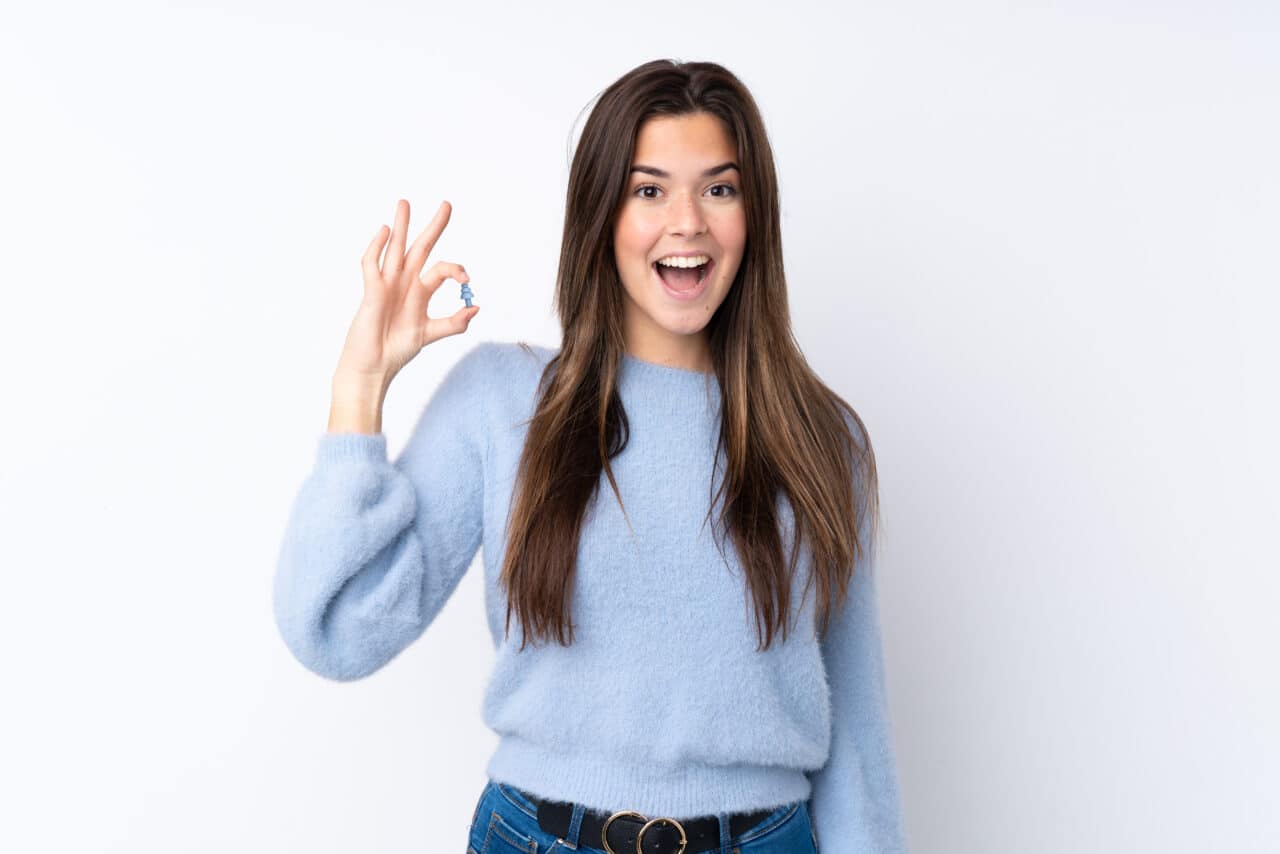
Yes, ringing ears after a festival can become permanent. The temporary ringing you feel after a loud concert is a warning sign that your hearing has been stressed. In most cases, it fades within a few hours or a day, but repeated exposure, or a single very loud event, can cause lasting tinnitus and noise-induced hearing loss that does not go away. The good news is that this kind of damage is almost entirely preventable with the right hearing protection.
Why do your ears ring after a festival?
That ringing, buzzing, or muffled sensation you notice after a festival has a name: tinnitus. It happens because the hair cells inside your inner ear, specifically in a tiny structure called the cochlea, have been stressed or damaged by loud sound. These hair cells convert sound waves into electrical signals that travel to your brain. When they get hit with too much volume, they react by firing signals on their own, which your brain interprets as a ringing or buzzing sound with no external source.
Festivals are one of the most common triggers for this kind of stress. Sound levels at live music events regularly exceed 110 dB, and in the US, there are no federal regulations limiting how loud a venue can be. For context, 85 dB is the threshold where hearing damage begins. At 110 dB, damage can start within minutes of unprotected exposure. The louder the sound and the longer you stay near the speakers, the more stress those hair cells absorb.
How long does ear ringing after a concert last?
For most people, the ringing fades within a few hours after leaving the event. In some cases, it can linger for a day or two, especially after a long festival with multiple sets. This temporary version is sometimes called a temporary threshold shift, and it means your hearing has been stressed but has not yet suffered permanent damage.
However, the fact that symptoms disappear does not mean everything is fine. Research from the World Health Organization shows that even when short-term symptoms fully resolve, progressive injury to the inner ear can continue for months after the exposure. The hair cells may appear to recover on the surface while underlying damage accumulates over time. This is why repeated exposure to loud concerts without protection is a real long-term risk, even if your ears seem fine the morning after.
Can tinnitus from loud music become permanent?
Yes, it can. Noise-induced hearing loss is permanent because the hair cells inside the cochlea cannot regenerate or repair themselves once damaged. There is currently no cure, only hearing aids or cochlear implants that help manage the loss after the fact. Severe tinnitus, the kind that does not fade, can seriously affect quality of life. It is linked to sleep disruption, difficulty concentrating, fatigue, anxiety, and depression.
There is also a lesser-known form of damage called hidden hearing loss. This is where the damage does not show up on a standard hearing test, but the person still struggles to understand speech in noisy environments. It is more common than most people realize, and it often goes undiagnosed for years. The takeaway is simple: by the time hearing loss becomes obvious, significant damage has already been done.
What decibel level causes hearing damage at live events?
The threshold for hearing damage sits at 85 dB. Above that level, the safe exposure time drops sharply the louder it gets. At 100 dB, the National Institute for Occupational Safety and Health (NIOSH) states that exposure is only safe for a maximum of 15 minutes. At 110 dB, that window shrinks even further. At 120 dB, damage can be instantaneous and permanent.
Live music events in the US regularly sit between 100 and 115 dB near the stage. Some can push higher. Because there are no federal noise regulations for entertainment venues in the US, concert and festival-goers are routinely exposed to levels that would require mandatory hearing protection in an occupational setting. Spending several hours at a festival without ear protection means accumulating a noise dose that can be many times the safe daily allowance in a single afternoon.
What should you do immediately after your ears start ringing?
The first thing to do is move away from the loud area. Getting distance from the source of the noise gives your ears a chance to begin recovering. Find a quieter spot, step outside, or move away from the stage. Even a 15 to 20 minute break in a quieter environment during a festival makes a real difference to your total noise dose for the day.
After the event, give your ears time to rest. Avoid putting headphones in at high volumes on the way home. Try to get a good night of sleep, since rest supports recovery. If the ringing has not faded after 48 hours, or if it is accompanied by any hearing loss, pain, or a feeling of fullness in the ear, it is worth speaking to a hearing care professional. Catching early signs of noise-induced hearing loss sooner rather than later gives you the best chance of protecting what hearing you still have.
Do earplugs actually protect your hearing at festivals?
Yes, and they make a bigger difference than most people expect. The concern most festival-goers have is that earplugs will ruin the experience by making music sound muffled or distant. That is a fair concern with foam earplugs, which block sound unevenly and flatten the music. But high-fidelity earplugs are designed differently. They reduce overall volume without distorting the sound, so the music still sounds like music, just at a safer level.
Wearing earplugs at a festival does not mean missing out. It means you can stay for the whole set, hold a conversation between acts, and wake up the next morning without your ears ringing. Over time, it also means protecting your hearing for the next decade of live music. Nearly one in four US adults between the ages of 20 and 69 already shows signs of noise-induced hearing loss. Most of that damage was preventable.
How do you choose the right earplugs for a concert?
Not all earplugs are built the same, and the difference really does matter at a live event. Here is what to look for when choosing festival ear protection:
- High-fidelity filter: Look for earplugs with a filter that reduces volume evenly across frequencies. This preserves the balance of the music instead of cutting out the highs and mids the way foam earplugs do.
- Adequate attenuation: For a festival, you want an SNR rating of at least 20 dB. This brings a 110 dB environment down to a much safer listening level.
- Comfortable fit: If earplugs are uncomfortable, you will take them out. Look for a multi-layer or mushroom-style tip that fits securely without pressure.
- Reusability: Single-use foam earplugs are wasteful and often perform poorly. A reusable pair made from durable materials is better for your ears and better value over time.
- Hypoallergenic materials: If you have sensitive ears, silicone and foam can cause irritation. Synthetic rubber alternatives are softer and gentler for extended wear.
Our Shush Acoustic earplugs are designed specifically for exactly this situation. They use a ceramic Venturi-shaped filter, the only one of its kind, positioned inside the earplug rather than at the tip. This design preserves clear, undistorted sound while reducing volume by 23 dB (SNR). The synthetic rubber construction is more durable than silicone, lasts at least 365 uses, and fits comfortably enough to wear all day without discomfort. We built them for people who love live music and want to keep loving it for years to come.
Veelgestelde vragen
Can I recover my hearing if I've already been to many concerts without ear protection?
Unfortunately, any hair cell damage that has already occurred is permanent since those cells cannot regenerate. However, the best thing you can do right now is stop the damage from progressing by wearing high-fidelity earplugs at every future loud event. Scheduling a hearing evaluation with an audiologist is also a smart move, as they can establish a baseline and catch early signs of noise-induced hearing loss before it worsens significantly.
How do I know if my tinnitus is temporary or becoming permanent?
If the ringing fades completely within 24 to 48 hours after the event, it is likely a temporary threshold shift and your ears have recovered from that particular exposure. If the ringing persists beyond 48 hours, sounds louder over time, or keeps returning after each concert even when it used to go away, those are warning signs that cumulative damage may be building up. At that point, seeing an audiologist for a full hearing assessment is strongly recommended rather than waiting to see if it resolves on its own.
Is it safe to wear earplugs for an entire 3-day festival without taking breaks?
Yes, high-quality reusable earplugs made from soft, hypoallergenic materials are designed for exactly that kind of extended wear and should be comfortable enough to keep in throughout full festival days. That said, giving your ears genuine quiet time between sets, such as stepping away from the stage or sound system entirely, compounds the protection your earplugs are already providing. Think of earplugs and quiet breaks as two layers of defense working together rather than one replacing the other.
What are the most common mistakes people make when using earplugs at concerts?
The biggest mistake is using standard foam earplugs, which muffle and distort music so badly that most people end up pulling them out after one song, defeating the purpose entirely. Another common error is inserting earplugs incorrectly, since a poor seal dramatically reduces their effectiveness even if the earplug itself is high quality. Finally, many people only put earplugs in once the music is already painfully loud, but by that point some exposure has already accumulated, so the habit of putting them in before you enter the main stage area is always the better approach.
Can kids and teenagers attend festivals safely, and do they need different ear protection?
Children and teenagers are actually more vulnerable to noise-induced hearing loss than adults because their auditory systems are still developing, making proper hearing protection even more critical for younger festival-goers. Kids generally need smaller earplug sizes to achieve a proper seal, so it is worth looking for earplugs specifically sized for younger ears or those that come with multiple tip sizes. Many pediatric audiologists recommend keeping children further from the main stage and limiting their total exposure time at loud events as an additional layer of protection beyond earplugs alone.
Are there any apps or tools I can use to monitor sound levels at a festival before damage occurs?
Yes, there are several free and low-cost sound level meter apps available for both iOS and Android, such as NIOSH SLM (developed by the National Institute for Occupational Safety and Health) and Decibel X, that give you a reasonably accurate real-time reading of the noise levels around you. If your phone is showing readings consistently above 85 dB in your location, that is your cue to either move further from the speakers or make sure your earplugs are properly seated. While these apps are not a substitute for professional-grade equipment, they are a practical and accessible way to stay aware of your noise dose throughout the day.
Does the ringing after a festival mean I should see a doctor, or is it okay to just wait it out?
If the ringing resolves fully within 24 to 48 hours and you have no other symptoms, it is generally considered a temporary threshold shift and does not require an emergency visit. However, if you experience ringing that lasts longer than 48 hours, any sudden reduction in hearing clarity, a feeling of pressure or fullness in the ear, or pain, you should contact a hearing care professional or your primary care physician promptly. Acting quickly in these cases matters because some forms of sudden hearing loss respond better to treatment when addressed early rather than after weeks of waiting.
Gerelateerde artikelen
- How do musicians on stage avoid hearing damage during live shows?
- Are custom-molded earplugs worth the cost for occasional concertgoers?
- How do DJs protect their hearing during long sets?
- Can wearing earplugs regularly at clubs protect your long-term music enjoyment?
- What decibel reduction do you really need for music sound protection?
- Can earplugs for music protection reduce listening fatigue during long shows?
- Do earplugs for EDM events block the bass frequencies you came to feel?
- Can wearing earplugs that preserve music clarity improve your concert experience?
- What type of ear protection works best in a nightclub?
- Do earplugs affect your ability to communicate with people at loud events?
- What is the safest way to protect your hearing at outdoor stadium concerts?
- What decibel level is dangerous at a music festival?
- Can hearing protection at festivals still let you enjoy music?
- Do earplugs affect how you experience bass and low-frequency sound at concerts?
- How do high-fidelity earplugs differ from regular foam ones?